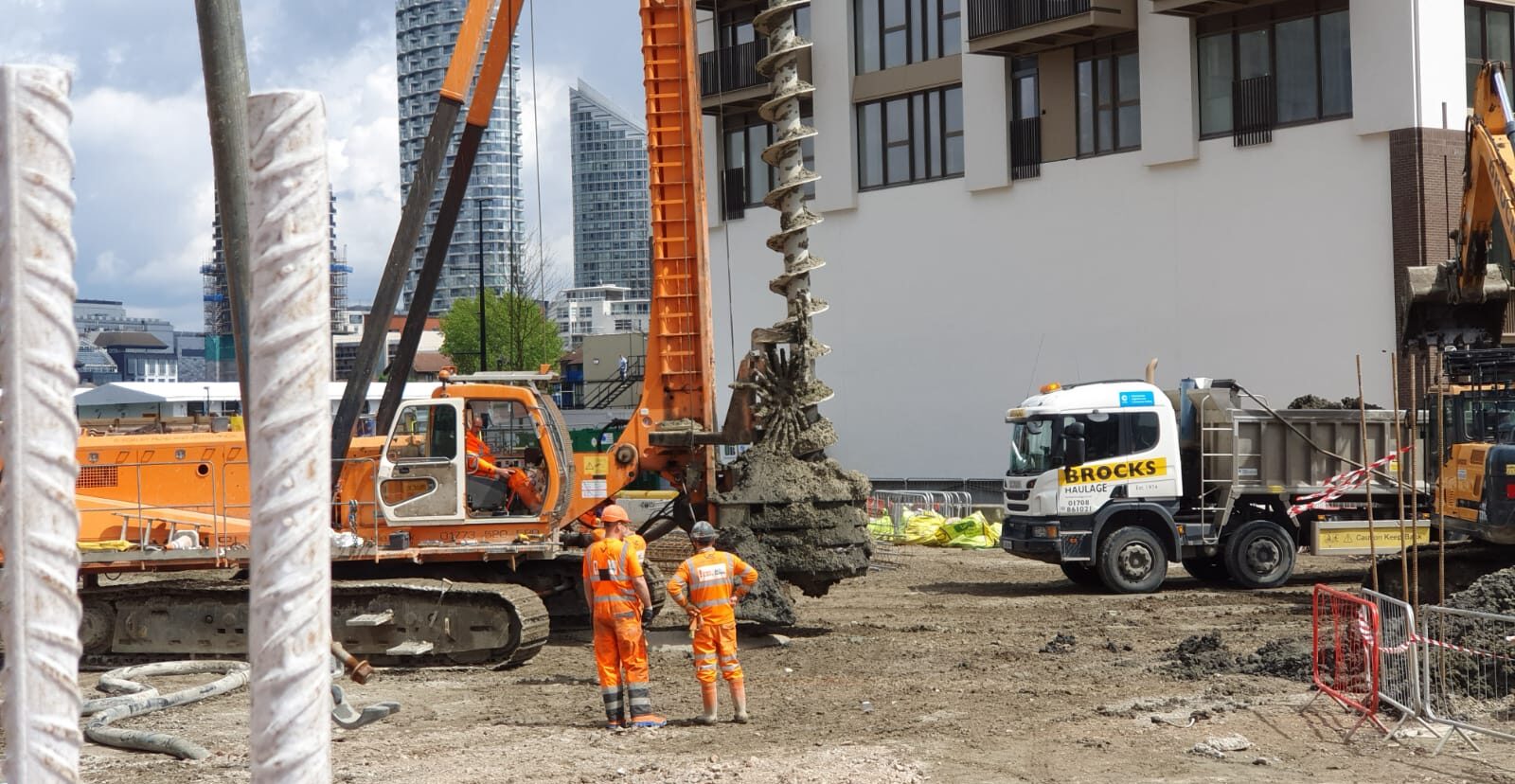
Van Elle CFA Piling at Wood Wharf Development, London

CFA Piling

Continuous Flight Auger (CFA) piling is a highly versatile technique for installing foundations in a wide range of ground conditions. It is a fast, quiet and virtually vibration-free method, making it ideal for projects in urban locations, adjacent to existing buildings and in environmentally sensitive areas where noise and vibration need to be minimised.

CFA piles can be designed to provide vertical, lateral and tension support. The method also allows piles to be constructed in water-bearing and granular strata without the need for temporary casings.
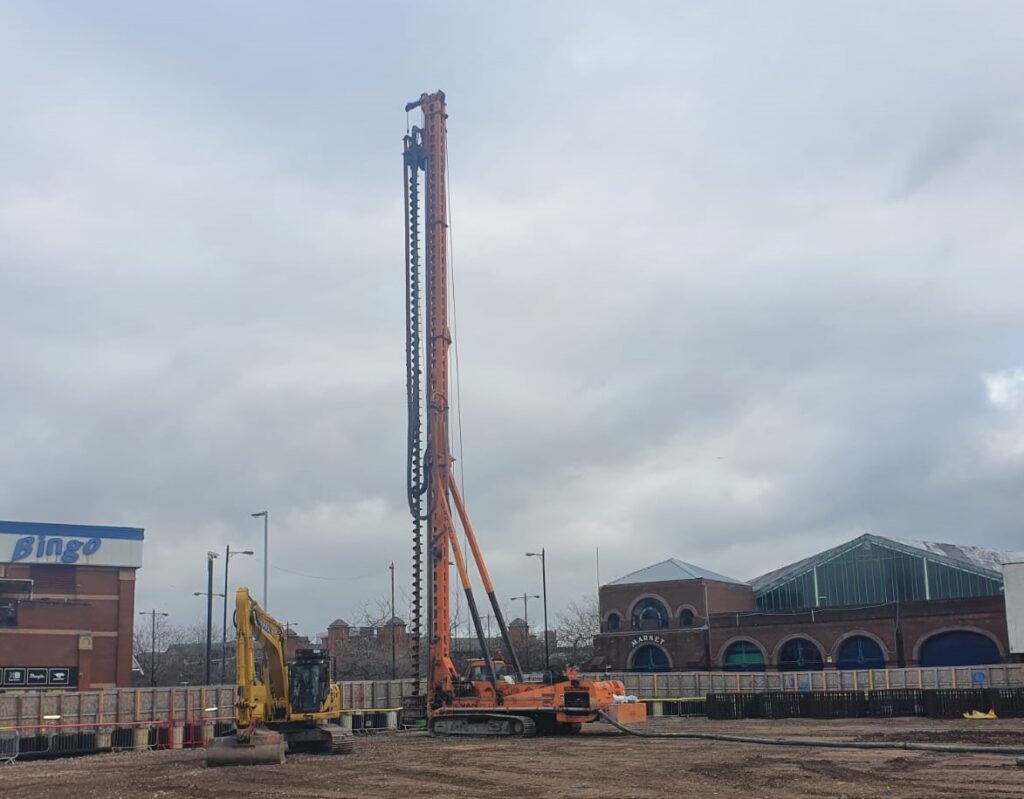
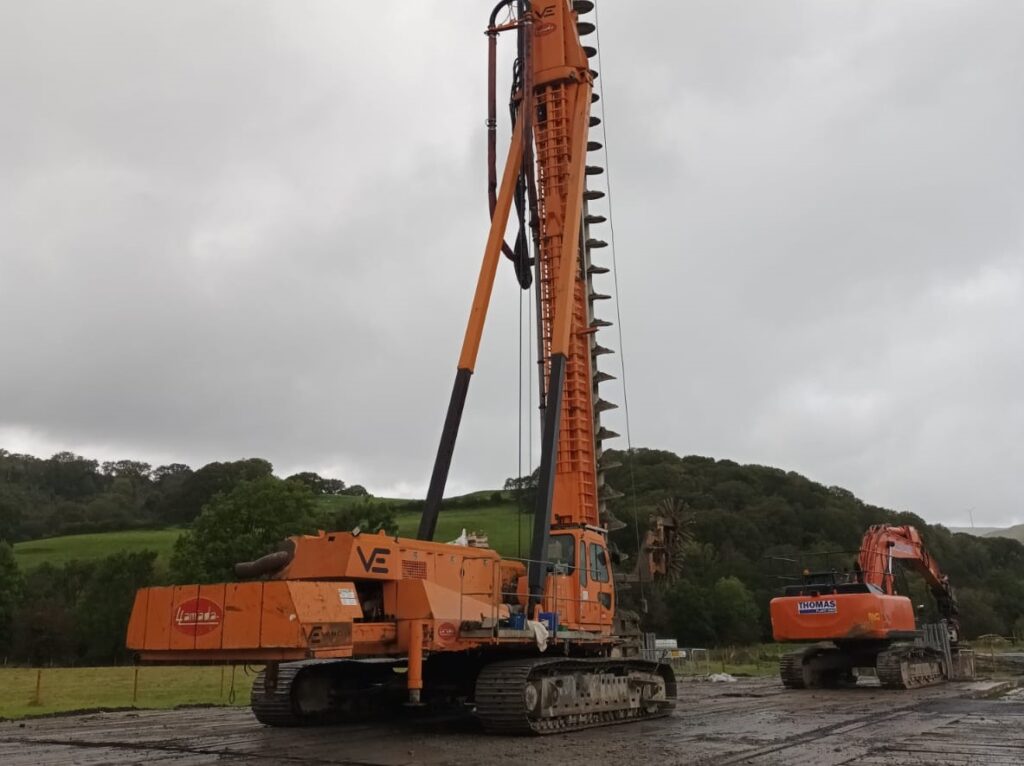
Van Elle CFA Piling

Project Advantages

  • Fast, quiet and virtually vibration-free
  • No requirement for casing, bentonite or polymers
  • Cost-effective and versatile, suitable for most ground conditions
  • Higher production rates than most other bored piling methods
  • Requires less plant and equipment on site compared with the rotary bored method

Example Applications

  • Structural foundations across all construction sectors
  • Suitable for clay, granular material, glacial till, and weaker rock stratum, including water bearing strata.
  • Secant and contiguous piled retaining walls can be used in conjunction with temporary props and permanent anchors
  • Slope stabilisation and retention to prevent slips and landslides
  • Retention for deep excavations and basements adjacent to existing structures
  • Working near buildings, homes, and environmentally sensitive areas
  • Infrastructure projects, including tunnelling, road and bridge construction, and flood prevention
Van Elle CFA Piling

Understanding CFA

CFA piles are constructed using a continuous hollow stemmed helical auger, which is rotated into the ground to the design depth.

This installation method allows piles to be formed in water-bearing and granular strata without the need for temporary casings.

On reaching the founding level, high-slump or flow concrete is pumped through the hollow stem in a controlled manner, maintaining a pressure head of concrete while the auger is simultaneously extracted.

As the auger is extracted, soil contained within the flights is cleared using an auger cleaner. Once the bore is filled with concrete, the pile reinforcement cage is installed into position to form the completed pile.

Throughout the installation process sophisticated onboard computers monitor both the boring and concreting process.

The real-time system provides the operator with feedback on auger depth, auger revolutions, drill pressure, concrete pressure, and concrete overbreak.

A cloud-based online data portal allows engineering teams to monitor pile installation data and contracts remotely in real time.