Bulk Infill Grouting

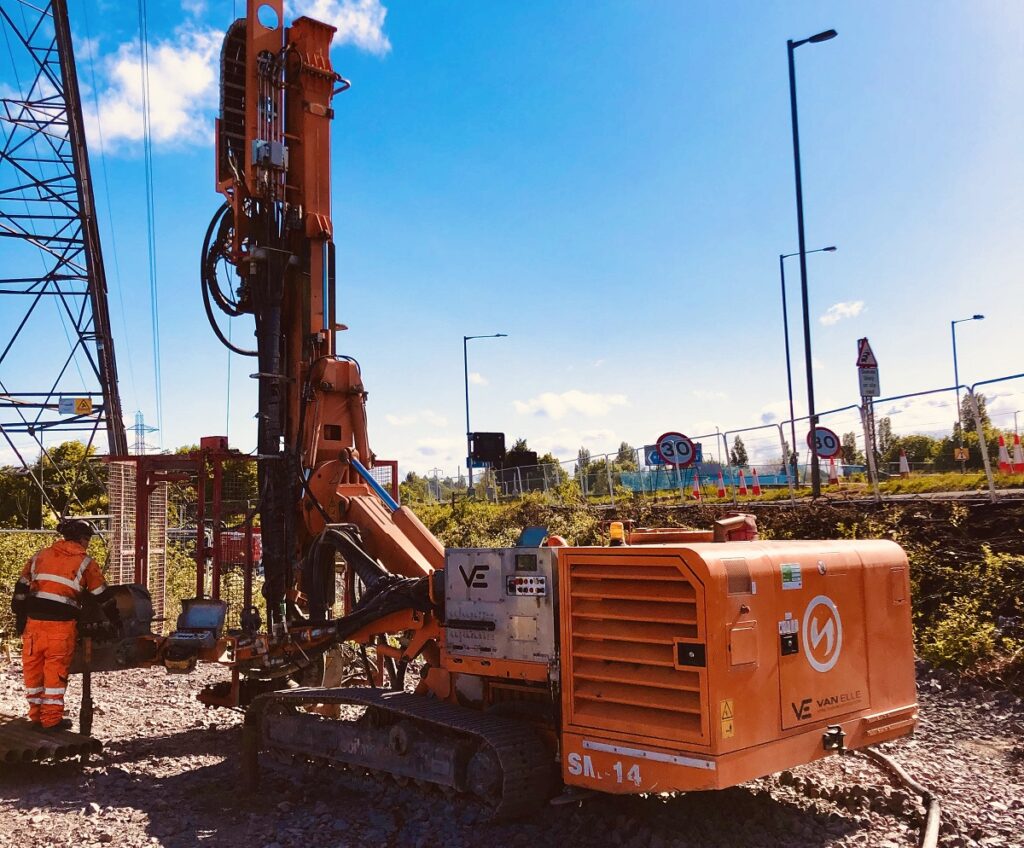
Bulk Infill Grouting is a ground stabilisation technique used to treat underground voids, such as abandoned mine workings, by drilling boreholes and injecting cementitious grout.

The grout fills and stabilises the voids, providing strength comparable to or greater than the surrounding ground, reducing the risk of void migration, settlement, or collapse.

Where necessary, grout may be injected under pressure to achieve displacement or to verify the extent and effectiveness of treatment.

This method enables safe development over previously unstable ground conditions.

bulk-infill-grouting

Project Advantages

  • Reduces the risk of void migration, instability, subsidence, differential settlement, or surface collapse
  • More cost-effective than alternative methods, such as full removal and replacement of ground
  • Allows treatment of low-strength, fractured, or voided strata at depth by drilling through competent layers
  • Can be executed within existing basements or other restricted-access areas
  • Enables angled drilling to navigate around obstructions or site constraints

Example Applications

  • Treatment of abandoned mine workings, including single- or multi-seam coal, sandstone, ironstone, lead, chalk, and fireclay workings
  • Remediation of abandoned mine shafts, crown holes, and other mining features
  • Infill of open or collapsed voids
  • Stabilisation of unconsolidated deposits or fractured rock strata affected by subsidence
  • Treatment of disused underground transport or drainage systems

Understanding Bulk Infill Grouting

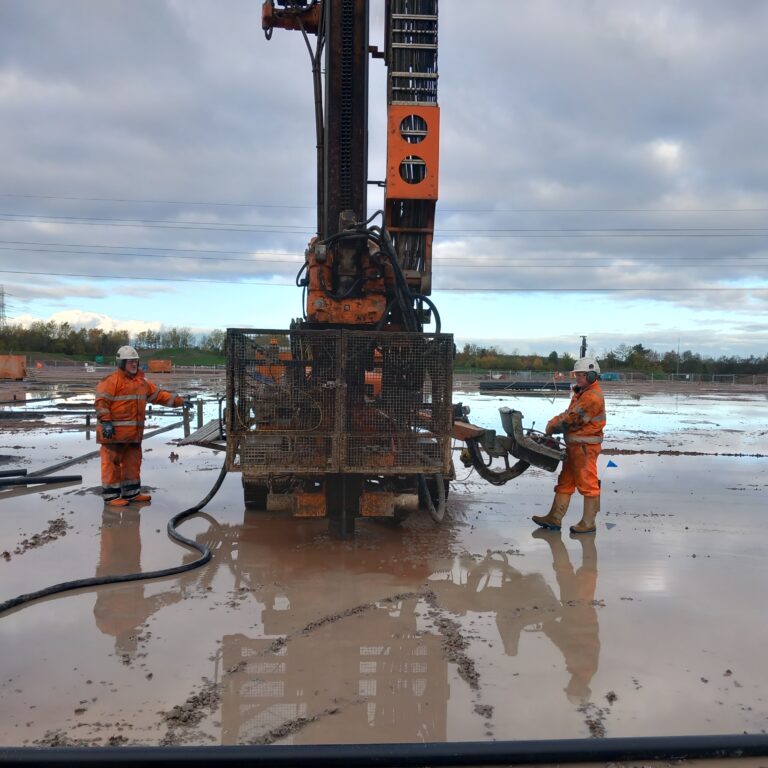
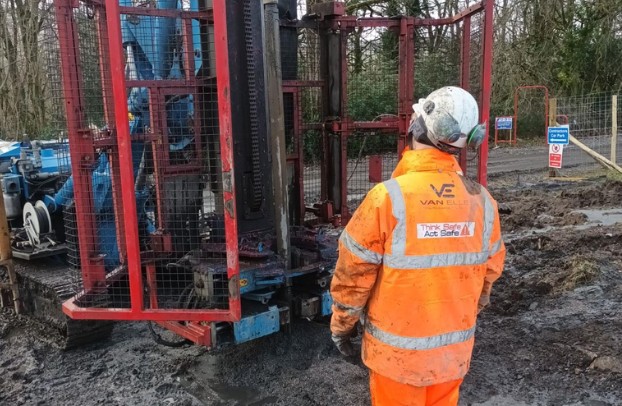
Boreholes are first cased to rock head and drilled to the target depth in a predetermined grid pattern, covering all areas of the proposed development.

Grouting is carried out via an injection pipe inserted into the cased boreholes. Cementitious grout (typically containing pulverised fuel ash (PFA) and sometimes additives such as sand or bentonite, with a compressive strength of around 1.0 N/mm² depending on the mix) is pumped from the base of the borehole.

As pumping continues, the grout forms a bulb that overlaps with adjacent bulbs to fill the worked seam or void. The extent of grout infill is determined by the level and size of the voids or seams requiring treatment.

Secondary and tertiary boreholes may be required between primary positions to improve effectiveness. Validation or test holes can be drilled and pressure-grouted on completion to confirm treatment success.

Where multiple seams are present, grouting starts at the upper seam and progresses downward. The process is repeated across the treatment area until the required consolidation is achieved.

Alternative materials, including sand, pea gravel, or bentonite, may be used where necessary to fill major voids or form containment barriers.