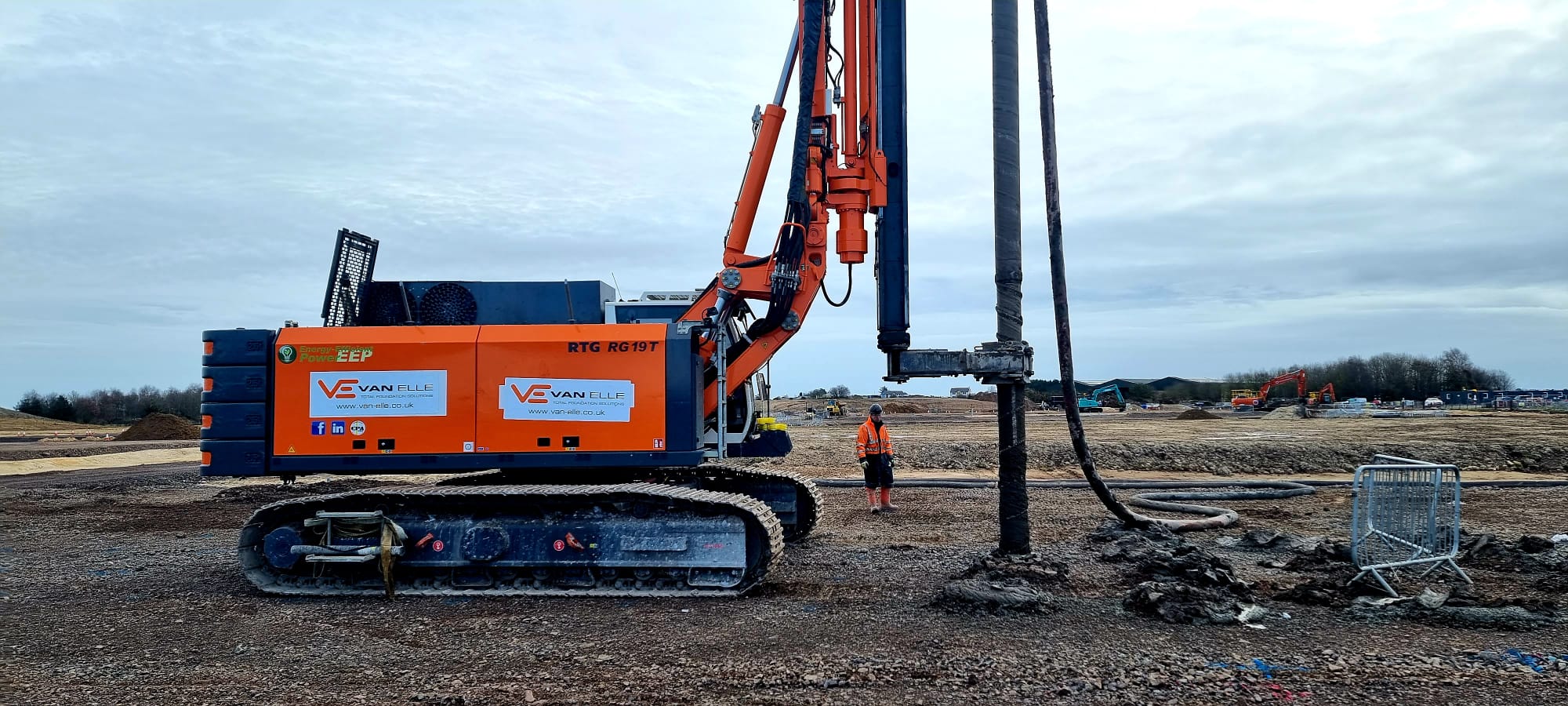
Rigid Inclusions

Rigid inclusions are a cost-effective ground improvement solution that increases bearing capacity and reduces settlement in weak or compressible soils, bridging the gap between vibro stone columns and traditional piling.

Constructed using a displacement auger, concrete columns are formed with minimal or no spoil generation. Columns are typically unreinforced, formed from low-strength concrete, and are commonly up to 350mm in diameter.

The system is used in conjunction with a load distribution mattress, enabling the use of conventional shallow foundation solutions such as pad foundations, strip footings, and ground-bearing slabs.

Rigid inclusions are well suited to industrial, commercial, and infrastructure applications, including warehouses, embankments, and, in some cases, residential developments.
Project Advantages

  • Increased bearing capacity
  • Improved settlement performance
  • Significant savings over piling
  • Bearing capacities of up to 250kN/m2 achievable
  • Up to 350mm diameter installed
  • No pile caps / cropping required
  • Installed to depths of up to 20m
  • Displacement system – no spoil
  • Modern fleet of rigid inclusion rigs – fully instrumented
  • Fast process – suitable for any size site
  • Improved ground allows the use of ground bearing floor slabs for further cost savings
  • Fully validated by load testing

Example Applications

  • Warehouses
  • Distribution sheds
  • Embankment support
  • Commercial and industrial buildings
  • Residential projects
  • Wind turbines
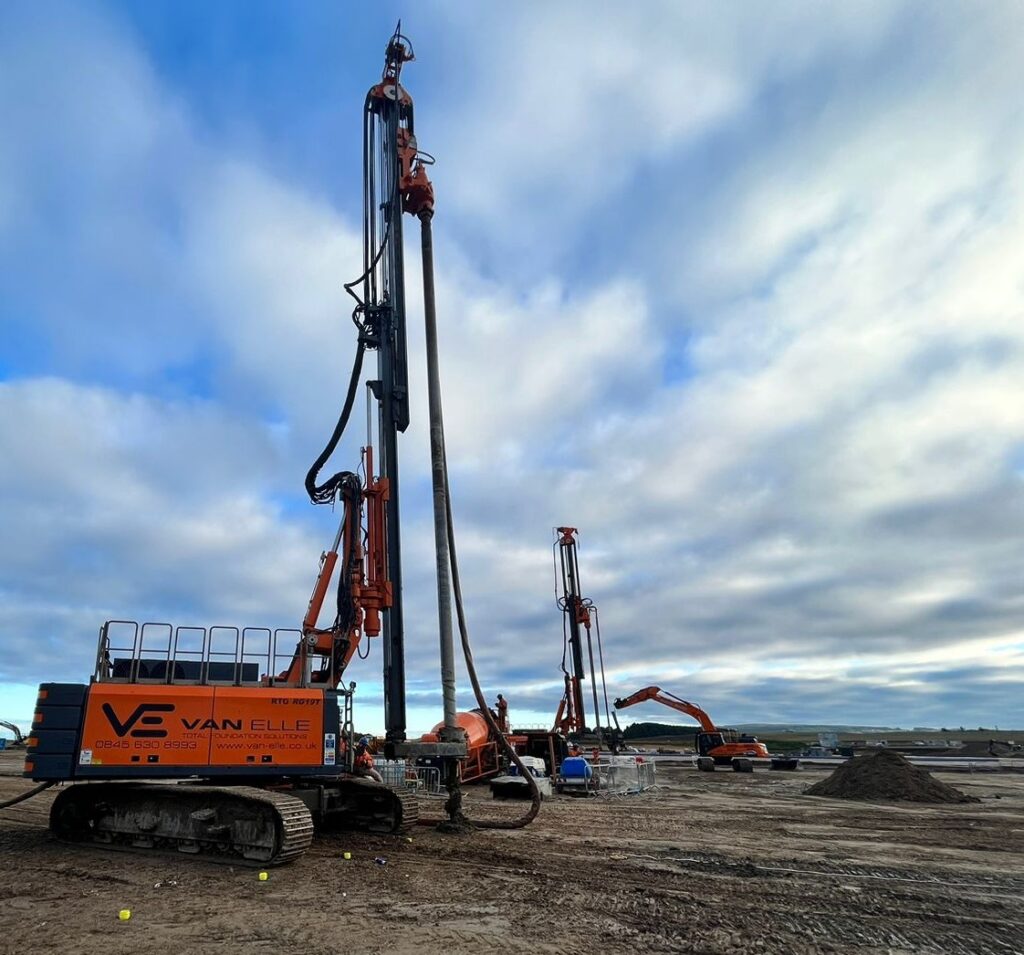
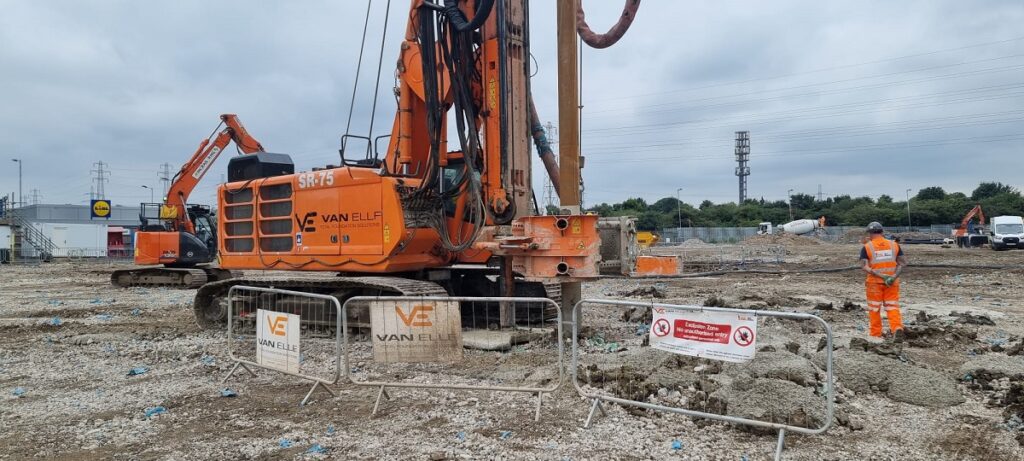
Van Elle installing Rigid Inclusions using a dedicated rig

Understanding Rigid Inclusions

Rigid Inclusions begin with the set up of a displacement auger over position and the commencement of drilling to design depth.

The use of a displacement auger forces the soil laterally into the ground around the position, improving the ground. Concrete or grout is pumped from a concrete drum through the centre of the auger while it is extracted.