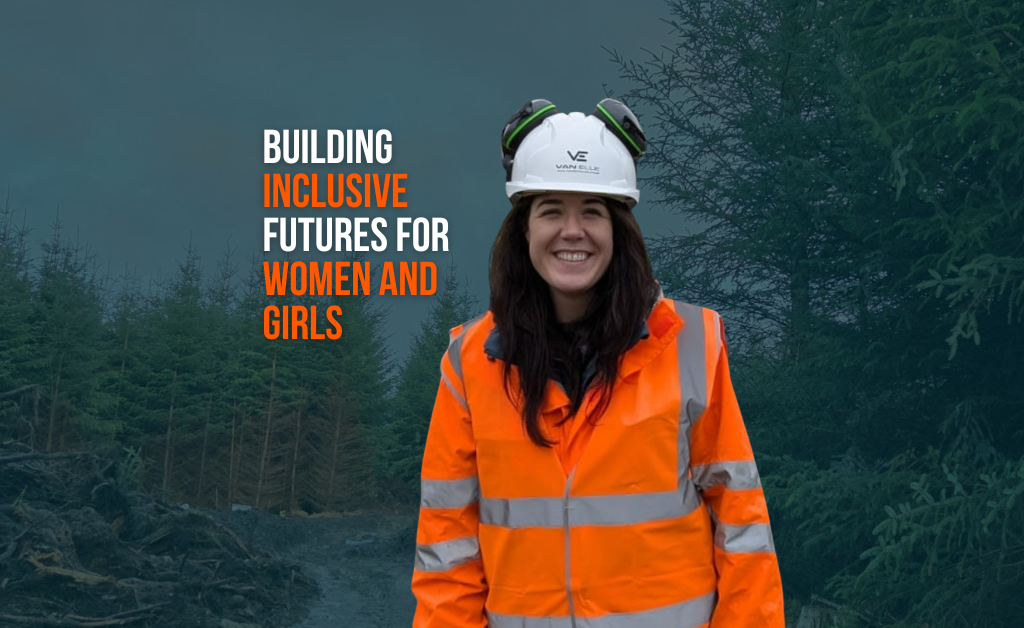
International Day of Women and Girls in Science highlights the importance of equal access to STEM (science, technology, engineering and mathematics) and the vital role women play in driving innovation, sustainability, and ethical technological progress. The day aims to close the gender gap, empower women, and highlight their vital role in shaping sustainable, ethical and advanced technologies.
To mark the day, we’re spotlighting Shannon Edgar, Project Lead at Strata Geotechnics.
With a background in Earth Science, Shannon has progressed through roles including Engineering Geologist, Project Geologist and Assistant Project Manager, building experience across major infrastructure sectors.
She is currently supporting ground investigation works on the 400kV Beauly to Loch Buidhe transmission project, where geotechnical expertise underpins safe and effective delivery.
We spoke with Shannon Edgar to learn more about her journey and career in geotechnical engineering.
Journey into STEM
Can you tell us what first drew you to Earth Science and how your career in geotechnical engineering began?
I have always been interested in physical geography and geology, an interest sparked by school trips to the Giant’s Causeway and the north coast. Seeing geology first-hand made me want to study Earth Science.
You’ve worked in several roles, from Engineering Geologist to Senior Geotechnical Engineer. How have those experiences shaped the way you work today?
Working in roles from Engineering Geologist to Senior Geotechnical Engineer has given me a broad perspective on different approaches and processes. I have learned to adapt to various company systems and software, which has strengthened my flexibility and problem-solving. Working on large-scale projects across sectors such as rail, highways, and predominantly energy, including the Loch Buidhe project I’m currently on, has given me a strong understanding of project requirements and how to deliver practical, effective geotechnical solutions.
On a project like Beauly, what does a typical day look like, and what do you enjoy most about your role?
A typical day involves training staff in the local geology, carrying out site visits to ensure engineers follow health and safety protocols during trial pitting, and managing data and report writing. What I enjoy most is the opportunity to get out onto site whenever I can.
STEM industries can still feel male-dominated. From your perspective, what helps create a more inclusive environment for women?
Creating an inclusive environment starts with encouragement, visible role models, and access to hands-on experiences. It also helps to foster a culture where questions are welcomed, achievements are recognised, and women feel supported to take on challenging roles and progress in their careers.
What advice would you give to young women or girls who are thinking about a career in STEM but are unsure where to start?
For young women considering a career in STEM, particularly in engineering or geology, my advice is to stay curious and explore what interests you. If you enjoy being outdoors and like the idea of travelling to different places, geotechnical engineering could be a great option. Do some research, ask questions, and look for opportunities such as summer internships or work experience as a field technician. These experiences give you a real insight into what the job involves, from drilling and site work to how projects are managed and help you discover what you enjoy.
What excites you most about the future of the industry and the opportunities for women to shape it?
I’m excited by the rapid growth of the industry, particularly within the energy sector and its increasing focus on renewable infrastructure. It’s rewarding to be involved in projects that contribute to essential infrastructure and long-term energy solutions. The work brings together the knowledge I gained through my geology background and my experience in civil engineering, while also giving me the opportunity to continue developing my skills in project and site management across the country.
It’s also encouraging to see more women on site over time. Greater representation not only strengthens the industry but also helps shift perceptions and inspire the next generation to pursue and shape careers in this field.
On this International Day of Women and Girls in Science, we celebrate professionals like Shannon who are helping to build inclusive futures and reaffirm our commitment to encouraging the next generation of women and girls to see science and engineering as fields where they belong.
We’re always looking for talented people to join our team. Visit our Careers page to see our current vacancies.